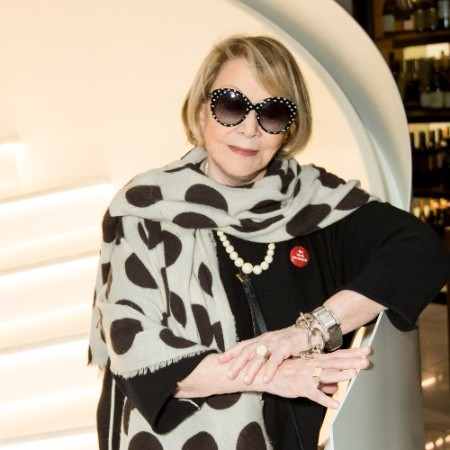
Aesthetic Titans #3: Inside the Plastic Surgery Beat with Joan Kron


When Allure greenlit a 1991 story on whether cosmetic surgeons talk people into procedures they don’t need, the reporter who took it signed up for a facelift mid-assignment — and built a 25-year career off the result.
Joan Kron joins Dr. Bass for a long conversation about what plastic surgery looked like before liposuction, before Botox, before fillers were anything more than collagen. Her early Allure features ranged from “Shopping for a New Face” to a story about a woman who died on the operating table during a facelift, and her monthly Scalpel News column ran for 25 years without ever publishing a “best doctor” list.
Joan and Dr. Bass talk through three decades of shifts: selfie culture pulling the average age down, the rise of Botox, the injectables boom now distorting faces a syringe at a time, the Brazilian butt lift trade where industrial silicone in the wrong hands has become a leading cause of cosmetic death, and a frank read on reality TV — Botched, she argues, isn’t really about plastic surgery so much as letting viewers feel superior to people who made bad choices.
The most practical thread is recovery. Major procedures need professional post-operative monitoring, not a girlfriend who can’t tell when bleeding has become a hematoma or local anesthesia has dropped blood pressure into the danger zone. Beauty is more accessible than ever, but the moment someone shops for price instead of expertise, that margin disappears.
About Joan Kron
Joan Kron is the award-winning journalist who built plastic surgery into a real reporting beat — 25 years at Allure, the book Lift: Wanting, Fearing, and Having a Facelift, and the documentary Take My Nose, Please (streaming on Amazon Prime).
Questions answered in this episode:
1. How did Joan Kron establish plastic surgery as a serious journalism beat?
2. What did plastic surgery look like in 1991, before Botox, liposuction, and modern fillers?
3. Why are “best doctor” lists in women’s magazines often misleading?
4. How has social media changed the average age of people seeking cosmetic procedures?
5. Why is professional post-operative supervision essential after a facelift, and how does too much local anesthesia raise the risk?
6. How did reality shows like Dr. 90210 and Botched shape public perception of plastic surgery?
7. Why is the Brazilian butt lift both the fastest-growing and the most dangerous cosmetic procedure?
8. How do injectable fillers distort the face when overused?
9. What’s the fascinating history behind Botox that almost no one knows?
About Dr. Lawrence Bass
Innovator. Industry veteran. In-demand Park Avenue board certified plastic surgeon, Dr. Lawrence Bass is a true master of his craft, not only in the OR but as an industry pioneer in the development and evaluation of new aesthetic technologies. With locations in both Manhattan (on Park Avenue between 62nd and 63rd Streets) and in Great Neck, Long Island, Dr. Bass has earned his reputation as the plastic surgeon for the most discerning patients in NYC and beyond.
To learn more, visit the Bass Plastic Surgery website or follow the team on Instagram @drbassnyc
Summer Hardy (00:00:01):
Welcome to Park Avenue Plastic Surgery Class, the podcast where we explore controversies and breaking issues in plastic surgery. I'm your co-host, Summer Hardy, a clinical assistant at Bass Plastic Surgery in New York City. I'm excited to be here with Dr. Lawrence Bass, Park Avenue plastic surgeon, educator and technology innovator. This episode is another in our Aesthetic Titan series. Who are we talking to today, Dr. Bass?
Dr. Lawrence Bass (00:00:27):
Mostly we're talking to physicians and scientists in this series, but there are some non-physicians who've contributed to our understanding of the field of plastic surgery in really powerful ways. Today we're talking to one of those individuals. Joan Kron is an award-winning journalist who has written for the New York Times, New York Magazine, the Wall Street Journal, and then spent 25 years as an editor at Allure Magazine. Starting in 1991, she established routine journalistic reporting about plastic surgery at a time when no one else would cover it. She went on to write the book Wanting, Fearing and Having a Facelift and more recently produced the award-winning film, Take My Nose Please. This film can be streamed on Amazon Prime Video. Welcome, Joan. I'm delighted to have you join us.
Joan Kron (00:01:34):
Hi, Larry. Nice to see you again.
Summer Hardy (00:01:37):
So to kick things off, can you tell us how you got involved in journalism?
Joan Kron (00:01:41):
I'll try and give you the very short version. I was a costume designer originally trained as a theatrical costume designer at Yale Drama School. I ended up married in Philadelphia to a doctor and I was involved in running a cultural institution called the Arts Council. And at one point, three young men who had just graduated from the University of Pennsylvania said they were starting an underground newspaper and they'd like me to be the society editor because they thought I was in society, which I wasn't. But I knew everyone in society and I knew everyone in the underground. And I said, "I can't write." And they said, "Well, everybody can write." I said, "Well, I'll try it. " And I did a story about my best friend was growing marijuana in her backyard. I went to the harvest, the marijuana harvest, and I said, "I think I can write." And I called one of the young men who had asked me to be the society editor and I said, "I've got a story for you.
(00:02:59):
" And he said, "Oh, it's too bad. We've lost our backer. Take it to Philadelphia Magazine," which I did. I was hired immediately and the editor said I was the natural and I wanted to go to journalism school. And he said, "No, they'll ruin you. I'll teach you everything you need to know. " And that's how I became a journalist.
Summer Hardy (00:03:22):
What got you interested in covering plastic surgery specifically?
Joan Kron (00:03:27):
Well, I went from Philadelphia Magazine. I left Philadelphia actually and got a divorce. And when I arrived with my Philadelphia Magazine credentials, I was hired by New York Magazine and then the New York Times and the Wall Street Journal. I mean, I started having a real career covering all kinds of things that were more like covering acquisitions. I could cover design, architecture, the home, shopping, fashion. I covered all those things that are considered the frivolous things. And I was hired by Allure Magazine to cover the psychology of beauty. During that time in the very beginning of Allure Magazine was 1991.
(00:04:20):
The editor had weekly meetings. Her name was Linda Wells. She came to an early meeting and said, "I want to see if plastic surgeons talk patients into surgery that they don't need. I've asked a writer that I know to do the story." I went to the editor after the meeting and I said, "I know that writer. She's 35 years old. I'm in my 60s. I'm the oldest person here. I was married to a surgeon, not a plastic surgeon, but a general surgeon. I know how to talk to doctors. I watched operations. I think I should do this story." And she said, "Well, try it if you like, but I'm not taking the other person off it. " In about a week I made four appointments and gotten the first appointment, wrote it up and brought it into her. She read it as I watched her and she said, "Oh my God, keep going.
(00:05:34):
" By the time I got to the fourth interview, I signed up to have a facelift, which was not in the assignment. They were not paying for it. I had the surgery and I called her as I was recovering and I said, "Linda, you have got to give me this beat. This is the worst covered subject in all of journalism and I'm going to do something for you and I guarantee you I'm going to get you some good stories." And that's how I started covering plastic surgery. And my first story was shopping for a facelift. No, shopping for a new face. And the second story was about a woman who died on the operating table having a facelift. After that, I had everybody, all the readers eating out of the palm of my hand, waiting for the next story. Very soon I added a column, a monthly column that was called Scalpel News when I would talk about new inventions or new developments in plastic surgery and then I would do feature stories.
(00:06:54):
And then I did that for 25 years and won an awful lot of prizes.
Dr. Lawrence Bass (00:07:00):
Now at that time when you got started, it was really a different era of plastic surgery compared to today. So tell me your impressions of the prevailing focus and atmosphere at the start of the 1990s compared with the way things are today. You
Joan Kron (00:07:20):
See that I'm laughing as you're asking this question. I don't know if your podcast people can see me laughing, but I can tell you that in the beginning there was no liposuction. There was no Botox. There was no fillers except collagen. It was a business of collagen and surgery.
Dr. Lawrence Bass (00:07:46):
Stone knives and bare skins.
Joan Kron (00:07:49):
Practically. But it's very interesting. I was very interested in the history of plastic surgery and I did a lot of research in it and I became the expert at that time because the one thing that did exist was phenol peels and PCA peels. And I was fascinated with the history of that. And I've always wanted to do a movie about that, but I haven't gotten around to it yet. But I'm only 96, so I have a couple more years.
Dr. Lawrence Bass (00:08:26):
Right. We'll look forward to that one sometime in the next few. But that's an interesting story because peels were not something that were really medical. They were done by lay peelers, not by medical people. And it took a long time before medicine and the plastic surgeons would take a serious look at it. But once they did, it got incorporated into the specialty and it's gone on from there. And of course, chasing wrinkles a really important part of what we do in plastic surgery.
Joan Kron (00:09:02):
You have to really appreciate how brave the patients were to undergo some of these early treatments because they were dangerous. Yu could die from a phenol peel and some people did and they were painful. And if they weren't done properly very slowly, it was very dangerous because at that time the doctors were just getting interested in the peel. They introduced me. Several of the doctors in your society, Larry, introduced me to a lay peeler in California. And he gave me, he used to call me on the telephone at 11 o'clock at night, New York Time and say, Joan, I want you to write my memoir and I'm going to tell you everything I know. And by the time I got done with those telephone calls, I had the formulas, I had the histories, I had the movie stars. I had the letter from Lana Turner that thanking this peeler for changing her life because the stars could not exist in Hollywood if they started aging.
(00:10:25):
And I have a whole chapter in my book, which by the way, Larry, my book is called Lift: Warning, Fearing and Having a Facelift. So if anybody wants to read it, there's a whole chapter about the history of peeling.
Summer Hardy (00:10:43):
Okay. So then going forward from there, what has been the 21st century approach to plastic surgery in the media?
Joan Kron (00:10:52):
Well, what the media likes and what people want to watch on television is a lot different than the doctors would like. Let me go back a little bit. The one story that I want to tell you about the stories that people were doing when I started covering, because I was a journalist and I was covering from a journalistic point of view, being fair, interviewing people on both sides, pro and con. But the stories that were being written at that time in the early '90s when I got into this were mostly writers who had never covered medicine and may not have been very experienced journalists who wanted a facelift and would make a deal with a doctor. And then they would write about the facelift and promote the doctor. So they were very one-sided stories, mostly dedicated to promoting a particular doctor. And that was, in my opinion, very dangerous.
(00:12:07):
And the other popular story at that time was best doctor list. I've never done a best doctor list. I'm the only person who covers plastic surgery who's never done a best doctor list because I think it is so unfair. Because if you can only name five names, who are you going to choose? I mean, it's just impossible. There's so many good doctors that nobody knows about. We at Allure never did a best doctor list, but every other women's magazine has done them. And what happens is depending on who's pushing home, they can completely skew what readers are searching for. And so if doctor has a particular name that they've put on a procedure, let's say they have a deep plane lift and somebody talks about it in a very personal story. Well, what do you know? Everybody comes to doctors and says, "I want a deep plane lift," when they may not need a deep plane lift.
(00:13:18):
And so I consider that kind of dangerous.
Dr. Lawrence Bass (00:13:23):
But as you point out, it's become extraordinarily popular. Doctors list not just in plastic surgery, but in every field of medicine, best school lists, best hospital lists sell a lot of magazines and newspapers.
Joan Kron (00:13:41):
Well, a best hospital list can be maybe more accurate because at least they can publish something statistically. Best doctor lists are based on recommendations and they depend on who you ask.
Summer Hardy (00:14:00):
Have you seen a change with social media and the portrayal of plastic surgery?
Joan Kron (00:14:07):
Well, social media has the interest in appearance. I mean, I'm the last person who said this. Everybody has said that the selfie has transformed plastic surgery. People take selfies and then they start evaluating themselves. I mean, I'm looking at my picture right now as I'm talking to you. And I guess if I were back in my 30s and 40s and I were looking at myself, I'd probably say, "Wait a minute, I see something here. I see something there. My nose looks awfully big. What's going on? " So yes, certainly social media has made plastic surgery explode and it made the patients much younger. When I started writing plastic surgery, I was 62 or 63 years old. I wrote it until what? I don't even know how old I was. In 2015 when I stopped writing for Allure and I was born in 1928, somebody can do some fast ficturing.
(00:15:27):
Where was I in my 80s? And when Alinda lost her job at Allure, I lost my job at Allure. Because Linda had always said, as long as I had my mind, I could write for Allure no matter how old I was. If she still had a job, I could still be at Allure. And then I'm 96, but luckily I'm not at Allure.
Dr. Lawrence Bass (00:15:55):
Right. You've gone on to bigger and better things.
Joan Kron (00:15:59):
Well, I went on to be interested in making movies because I think people like to look at pictures and they don't want to read anymore. That's a very big problem when you're trying to explain complicated things to readers and they don't want to read. And you know, Larry, that a lot of doctors can play games with the before and after pictures. And there are doctors that we know of. I mean, I can't name them right off the top of my head, but I mean I know doctors have been exposed for borrowing other doctors' pictures. I've even interviewed a doctor. He worked for an older doctor who was really failing. And when the patient went to sleep, he would take over and do the operation. So I mean, there are all kinds of games that could be played and it's unfortunate. I think the biggest problem is that today people read about something and all they know is the name of that procedure, whether it's an injection, whether it's a peel, that they're going to do something for their skin.
(00:17:16):
And they go and asking for these things by name. And if anybody calls me and they say, "What do you think of this peel, Joan? Or what do you think of this light source?" I say it doesn't matter what technique they use, what laser they use, who is holding the wand of the laser? Is it an aesthetician who has never done it before? Is there a doctor in the office in the spa where you're getting this done who is going to supervise? Or is the doctor 50 miles away? And if you had an emergency, the doctor couldn't be there in time. So these are the problems that I addressed in my column every month in Allure.
Dr. Lawrence Bass (00:18:13):
And that's a really important point. I mean, all of those things are tools and tools are good, but it's not a magic bullet. Some particular tool can't magically cure all ills. And it's about the experience of the providers and the relationship working together to plan for the most concerning aesthetic features that are important and significant for the individual patient.
Joan Kron (00:18:47):
That's true. And also I know of cases where people have had a lot of liposuction say, and in the course of that, they might've gotten a lot of local anesthesia in addition to any twilight sleep or real anesthesia.
Dr. Lawrence Bass (00:19:08):
General.
Joan Kron (00:19:09):
General, thank you.
(00:19:13):
In addition to local, they've gotten some general anesthesia, but they don't want to pay for somebody for a nurse to take care of them while they're recovering. And they have a girlfriend or a husband or a friend down the street, a relative, and the relative falls asleep the first night. And if they've had a lot of local anesthesia, the blood pressure can drop. And there have been cases when patients have succumbed to that local anesthesia, which everybody thinks, oh, if it's local anesthesia, it's perfectly okay. Well, it's not perfectly okay if you've had a ton of local anesthesia. At least that's where I know you're the doctor. I'm not a doctor, but I have covered some cases. The thing I always say about the facelift and big liposuction cases and tummy tucks and whatnot, breast implant, when you're recovering, get some professional to watch you who will stay awake, take your blood pressure, because that is a danger time.
Dr. Lawrence Bass (00:20:29):
Yeah, that's really important. And that actually is a change not in media, but in medicine over the past few decades that when I trained, we had two floors of Manhattan Eye Ear and Throat Hospital just for plastic surgery inpatients. And now of course, all of that surgery is done ambulatory and mostly in an office setting. And that's been enabled by improvements in anesthesia and other things, but it's still medical care. It's beauty, but it's medical care and it has to be taken very seriously. And my office staff, people like Summer will tell you I'm always emphasizing to them that this is not a game. This is a deadly serious undertaking where safety has to be item number one every day when you get up.
Joan Kron (00:21:27):
Well, that's absolutely the case. And the other thing is everybody knows that I've had three facelifts. The first facelift, I was in Manhattan Eye and I was stayed overnight because my doctor said to me, "If you're over 60, I want you in a hospital." And I was over 60 and I was in a hospital and I had a very good recovery. By the time I had my third or maybe my second and third, I was recovering in a hotel. It's so funny, you can't remember. All these things kind of fade away. My last facelift was in 2005, almost 20 years ago. Is that right? Yes.
Dr. Lawrence Bass (00:22:23):
Yes, yes.
Joan Kron (00:22:25):
Yes,
Dr. Lawrence Bass (00:22:26):
You've
Joan Kron (00:22:26):
Got
Dr. Lawrence Bass (00:22:26):
It exactly right.
Joan Kron (00:22:28):
I know that there was no hospital that I could recover in. So where was I?
Dr. Lawrence Bass (00:22:34):
Yeah, it's the sweet hotel. But with a nurse, somebody to watch and monitor and in communication with your surgeon that the care is not done when the last stitch or the bandage goes on. The care continues for weeks, months during the recovery. Also very important.
Joan Kron (00:22:59):
So yeah, there's so many things. And of course I cover all those in my book. I'm sure you have one. Don't you have a book, Clary?
Dr. Lawrence Bass (00:23:09):
I don't have a book. I have lots of articles and book chapters, but I've not written a book yet.
Joan Kron (00:23:15):
Oh, well, okay. Then we can push my book. Okay. Absolutely. You can buy it on Amazon for at least $4.
Dr. Lawrence Bass (00:23:23):
And a really great explanation of the whole constellation of what happens around having a facelift. It's really the authoritative discussion on the subject.
Joan Kron (00:23:40):
Well, I appreciate that very much. I did have doctors saying that they recommended my book and I was always very proud of that. Lucky in a way that my first husband was a general surgeon and it enabled me to, first of all, because when I was married, I believed that a wife should know what her husband does. And so I would go and watch surgery. And of course, the first time it was an appendicitis, an appendix operation. And I don't think I lasted too long in the operating room. But as I continued to go, I got braver and braver. And I remember when I went down to Brazil to cover Dr. Pitangi, perhaps the most famous plastic surgeon in the world at that time, and he didn't want to let me in the operating room. And I said, "You can. I'm used to watching surgery.
(00:24:43):
I'll be okay." And so he stationed a resident with me in the ante room and he made me watch his operation on closed circuit video until he saw that I wasn't fainting. And then he let me into the operating room. I have witnessed quite a lot of operations and I don't faint anymore.
Summer Hardy (00:25:12):
This has been a really interesting discussion to listen to. I'm going to shift topics a bit and ask if you've seen a difference in a person's willingness to acknowledge plastic surgery publicly over the past few decades, if that's changed at all in your view.
Joan Kron (00:25:28):
Oh, Summer, that's such a fun question. Thank you. It has changed, but not that much. Even though people say that it has changed, I dare them to prove it. Well, first of all, the more famous you are, the more well-known you are, the less you kill. That's the first thing. There are very few people who are well-known who confess. And if they do confess, they only confess a small percentage. In other words, it's okay now. What's okay is to say, "Oh, I've had a little Botox." We've gotten to that point where they can say that or where Jane Fonda can say, "I had a facelift, but I really regret it. I don't. Really, Jane? You regret it? I don't think so. I'm sorry.
Dr. Lawrence Bass (00:26:34):
My question is which one do you regret?
Joan Kron (00:26:39):
Okay. She even published the name of her doctor on Facebook. Well, does that tell us something about perhaps she felt an obligation to name him? I feel very sorry for the doctor who did my three facelifts because I love my doctor. I was very happy with him. I have never revealed his name publicly. If a friend has asked me, I've told a few friends, but I've never published it. I've never written it because I thought it was really in bad taste and I paid for my operations and I just felt that I didn't want people to think I was pushing a doctor. It's an issue in journalism, but the fact that I went back to him twice after the first time means I was quite satisfied. If I were working at the New York Times at the time that I was doing it, of course that would be very forbidden.
(00:27:53):
I mean, times is really tough.
Dr. Lawrence Bass (00:27:56):
They were tough on plastic surgery in a lot of ways. They wouldn't cover it except to disparage it at the time when you first got involved in this area. Of course, they later realized there's so much public interest that teaching about it is a worthwhile undertaking, something educational that doesn't endorse it or that tells some of the pros along with some of the cons, rather than just again, disparaging something or telling cons.
Joan Kron (00:28:32):
But it's really funny. Recently I wanted to reach a particular movie star who lived in a particular city that was not New York. I called a dermatologist in that city and I'm not naming names. Okay? I'm sorry.
Dr. Lawrence Bass (00:28:53):
No,
Joan Kron (00:28:53):
I'm
Dr. Lawrence Bass (00:28:54):
With you. We want to keep it philosophical and educational, not gossip.
Joan Kron (00:29:02):
Okay. I'm with you. It's a fun story. So I called a dermatologist and I said, "I know that this particular star lives in your city and I wish I knew how to reach her." Then the dermatologist said to me, "No, Joan, you know I can't talk about my patients." So I had actually hit bingo on this woman dermatologist, but I'm not saying either of their names. Okay.
Dr. Lawrence Bass (00:29:45):
Fair enough. Fair enough.
Joan Kron (00:29:49):
But I do want to talk about television because I think I didn't answer Summer's question properly. What was very popular Or in the late '90s and the 2000s was first of all, the reality shows about plastic surgeons. And remember people were just fascinated with Dr. 90210 or whatever it was. And so plastic surgeons in California particularly were vying to get on that particular show because it was like a lifestyle show about a plastic surgeon. I mean, it was so much publicity and of course they always intimated that they had famous people. Well, every plastic surgeon, I think there is not a plastic surgeon who hasn't done some celebrity. I mean, if they live in Middle America, maybe it's the governor of the state or maybe it's the mayor of their city. But I mean, in California, all they have out there are actress and actresses.
(00:30:58):
They're going to find some famous people to same about New York. So everybody has famous patient. The other popular show is The Botched.
Dr. Lawrence Bass (00:31:10):
Sure.
Joan Kron (00:31:11):
People love Bot. And I remember doing interviews not only with the doctors on Botch, but with people who watched Botch. And I said, why do you like a show that's only about things that are mostly big accidents that have to be repaired or about people who have craved so much surgery that they're really out of the mainstream? That is not what plastic surgery patients are about. The mainstream patient of plastic surgery just wants something to make him or he look better. They don't want 20 procedures. So when you just focus on people who have had excessive numbers of procedures and they want to look like Barbie or they want to look like Johnny Carson, this is not what real plastic surgery is about, but Botch is so popular because the people who watch it feel a sense of superiority when they see these people who have made bad decisions, bad choices in their life because they've chosen doctors without doing any research about their abilities or they're asking for so much and they've found the one doctor in their town who will do it when they should have said no.
(00:32:45):
Botch does something psychological for the viewer, which has really nothing to do with the surgery. It has to do with them feeling smarter, cleverer, having better judgment than these patients that they're making fun of. So I think that's unfortunate, but again, it's good television.
Summer Hardy (00:33:09):
So switching topics once again, what do you think the role of the facelift is today?
Joan Kron (00:33:17):
Today, I think the big problem that I see in plastic surgery is that there are too many injections. People believe they call everything facelift in a bottle, facelift and a syringe. It's not a facelift. A facelift is a facelift and it's surgery. If it's a syringe facelift and you're doing it over and over again, you are distorting your face. You're distorting your lips if you do it once. I mean, there are people who have very, very thin lips and I can understand when they have a tiny, tiny bit of filler because they really have a deficiency in their lips. But if they have normal lips and they want to make them bigger because they think that that's a good style and they'd like to look like a Kardashian, then they are distorting their faces. I mean, just watch the... Sometimes doing very little can make very large difference and that is where I think very little injections can make a big difference.
(00:34:35):
And if you don't have a real deficiency where you are adding filler and you're adding filler because you think it's stylish to have full-blown lips, you are really distorting your own beautiful face and it's paphetic.
Dr. Lawrence Bass (00:34:54):
This is the big push-pull that's taking place nowadays between surgical and non-surgical things. I mean, we'd love to accomplish whatever the aesthetic goal is in the least invasive way possible, but the reality is sometimes it is about surgery and just taking a non-surgical modality like filler, which in proper measure can be helpful and doing too much of it, then you have too much of a good thing. It's distorting and it's a bad idea. And on top of that, you have people out there showing what they've done and popularizing it in social media on the internet, every place you look makes it very hard for people to get a good reality testing basis for making decisions. So with all the noise out there, Joan, how do you think people should get to the truth?
Joan Kron (00:35:58):
Well, I just think it's really hard. I have a lot of compassion for people who would like things, who want things, but don't know who to ask, don't have the friends because when everybody's lying and only telling half of what they had, how can you make a decision? Even when they say that they're helping you, they might not be telling you everything. They just tell you a little. I don't have a solution. I tried my best to only quote doctors that I felt had good reputations and had board certification. That was something that we took very seriously at Allure and I felt that because when I was married to the general surgeon, he taught me something that stuck with me the rest of my life. Remember, he did not do plastic surgery. So he was just talking about surgery in general, but he said when somebody reads, let's say in Time Magazine or Newsweek or the magazines we had when I was married to him in the 1950s, he said they were more careful about their money than asking about surgical procedures.
(00:37:22):
He found it very dangerous that media could be very dangerous for surgery in general. And I saw that in when I was covering, because every new procedure right now, especially there are all these influences online and they're all pushing these so - called cosmetic treatments, which because they're not surgical, they're non-surgery, but they can be dangerous or you can be allergic to them. Or do I really want a thousand needles in my face? I don't. I don't care how many articles I read about. Please tell me the name of the needling thing.
Dr. Lawrence Bass (00:38:15):
Oh, the microneedling here
Joan Kron (00:38:17):
Needles. Microneedle. Thank you. I don't care how many articles I read about microneedling and how fabulous it is and they're going to put some wonderful proteins in my skin and it's going to blossom and it's going to be great. I do not want a thousand needles in my face. That's it.
Dr. Lawrence Bass (00:38:37):
I'm guessing you don't have any tattoos either.
Joan Kron (00:38:44):
If I reach a hundred, I'm going to have a very small tattoo.
Dr. Lawrence Bass (00:38:48):
Okay. But that's that thousand needles. I had this experience even as far back as the '90s and certainly after Restylane came around in the mid 2000s where people would come in with pictures for magazines of models who had the very puffy lips that were all full in the corners and humans' lips taper as they go to the corner.
(00:39:16):
They're not fullest in the corner, but that's a really quick, easy way to inject to put the needle in on each side and squirt in a bunch of filler. And it was so prevalent amongst the models and in so many fashion magazines that ladies would come in and show me the picture and say, "Give me lips like that. " And I would have to try to talk them out of it because it wasn't a natural human look. So it's an example of how media can really distort our view of what's not only what's normal but of what's beautiful.
Joan Kron (00:39:53):
People's faces do change over time when they're getting just only injections. I just worry about it. And of course the cost of injections are so high. It really adds up if you're going to have Botox, even if you're going to have Botox twice a year and not having it three times a year, which might be the norm. I mean, I probably had Botox for 25 years. I had it very soon after it was approved and I had it until a few years ago now. Once I passed 95, I said, "That's it. " I know that when I write about plastic surgery, I'm putting people on the operating table. I know that I'm sending them to spots and whatnot where these things are being given and perhaps not under the best circumstances because they're shopping for price, they're not shopping for quality and they don't understand that there's Botox and there's Botox and it depends on who's injecting it.
(00:41:11):
The Botox is neutral. I think it's a good product, but it's the person who's injecting it who can make the difference because they know the anatomy and they know where it's going to do the best work and it's not just squirting it into any old place in the body.
Dr. Lawrence Bass (00:41:33):
Amen.
Summer Hardy (00:41:37):
So you've touched on decision-making a little bit, but I'm just curious. Almost everyone has some ambivalence about doing a cosmetic procedure, and that's not strictly medically necessary. So what's your advice about deciding to go ahead or not with the cosmetic procedure? How should people decide?
Joan Kron (00:41:56):
I think if the cosmetic procedure is FDA approved, if it needs to be, that would help because let's say having industrial silicone injected into your buttocks is not FDA approved because we know how many people have died from butt injections and it's the fastest growing procedure right now. The Brazilian butt lift is called, I think. Once industrial silicone gets into a blood vessel, you're cooked. That's it. You're dead. It's subject ended.
Dr. Lawrence Bass (00:42:41):
Yeah. I mean, it's what I said earlier, safety has to be number one and at the Plastic Surgery Society, there's been a decades long or two decades long set of initiatives about a culture of safety and examining how things should be performed to the safest possible standards, seeing a core specialties provider, someone who trained in doing aesthetic treatments as part of their formal hospital and residency training at least means that provider, that doctor or surgeon has been exposed to what the safe approach is. Part of it is also keeping up over time because standards change improve as we learn more and it's very hard to consume a soundbite on social media and think you understand how to decide about those things because that just doesn't encapsulate enough information, nevermind expertise.
Joan Kron (00:44:05):
I'm curious about Summer. I know that she's supposed to ask questions of me, but I'd like to ask her a question.
Summer Hardy (00:44:14):
Okay. Yeah.
Joan Kron (00:44:15):
Has she ever considered any cosmetic treatment? She's awfully pretty.
Summer Hardy (00:44:21):
Thank you. I'm pretty young still, so I haven't seriously considered anything. The one time I did get Botox, it was in my masseter to help my teeth grinding and that was really helpful. I can see why people would go for cosmetic treatments, but I think I'm too young to seriously consider plastic surgery, whether it's surgical or nonsurgical.
Joan Kron (00:44:44):
Are you going to be a doctor?
Summer Hardy (00:44:46):
Yes.
Joan Kron (00:44:47):
Are you a doctor?
Summer Hardy (00:44:48):
No, I'm not a doctor yet. I'm entering medical school actually next month.
Joan Kron (00:44:54):
And are you going into plastic surgery?
Summer Hardy (00:44:58):
I'm not sure. I don't think I am. I do want to go into a surgical field, but I'm not sure if plastic surgery is the one that I'm interested in.
Joan Kron (00:45:07):
I see. Okay. I want to know if Summer has friends who have had plastic surgery. Of course, young women tend to... I mean, these procedures follow kind of ages. When they're younger, they worry about their breast. Although I know that they're all worried about their wrinkle and I know my 18-year-old granddaughters are worried about getting the best face cream, which I think is hysterically funny, but sad also because they're wasting their hard-earned money where they have jobs in the summer and they're spending it on face creams at Sephora. I mean, they have most beautiful skin. What is the going on with your young women? Do you see them a lot in your office, Larry?
Dr. Lawrence Bass (00:46:04):
I mean, my practice is focused on facial rejuvenation, so I mostly see people that are 40 and older and increasingly 60 and older because actually mean facelift age in the 30 years I've been in practice has gone up, not down because of all the good alternate treatments we have that's slow early aging. But I think there is a concern and I hear from some of my colleagues that and in certain parts of the country, it's very popular for a 25-year-old to be doing Botox filler eyelid plasty, which I completely do not understand. They've had liposuction, breast implants, perhaps rhinoplasty, and that's an awful lot of work for someone who's still at their prime of appearance. So I like these things. This is my industry and I'm in favor of them, but there is too much of a good thing. It's not that more is better.
Joan Kron (00:47:20):
Well, in my movie and take my nose, please, I focused on comedians because comedians are the only people who are honest about plastic surgery. If you think about it, what we know about plastic surgery, a lot of it comes from Joe Rivers in the movie. I had to find people who wanted plastic surgery but who had not had it because it doesn't make a good entertainment. It's much better I was warned to find people who wanted something and then they got it and you could follow them and you had to accept whatever happened if it was good news or bad news if they liked it, if they didn't like it. I found two fantastic women, one with a young comedian in Pittsburgh who wanted a very simple nose job because he had the tiniest bump on her nose and the other was Jackie Hoffman, the curmudgeon who's often seen in murders in the building.
(00:48:40):
She was offered a nose job when she was in her teens by her mother and she didn't take it and she decided that maybe she needed it now, but she did not want too much done because her whole livelihood depended on being kind of funny looking. The movie is about these two women and going through surgery and how they approached it, how they felt about it in the end. And there's a wonderful scene in the picture where Emily, the Pittsburgh comedian, comes home from New York where she's had her nose job and her boyfriend picks her up. I think they weren't married yet, but they were living together and he picks her up at the airport and she says, "So what do you think? " She starts to cry.
Dr. Lawrence Bass (00:49:41):
Oh goodness. And it's amazing how powerful friends and family are at coloring patients' views of how well something went. They can really buoy them or poison the whole experience. And rhinoplasty is something that young people do that people in their teens and in twenties frequently do. So based on your knowledge of plastic surgery, your experiences making the movie, what are some of the challenges people face in deciding whether they should do it and how much they should do?
Joan Kron (00:50:26):
I lived that experience because when I had, I think it was my so - called second facelift, which was basically actually a brow lift and a tiny shaving down, a little bump on my nose said something that was really from the nose tipping down as it does when you're older than the cartilage and in front of your nose, the tip of your nose starts hanging down a little. Anyway, I had a very slight nose job with my brow lift and my husband couldn't make up his mind when he thought about it for about two weeks or a month and finally every day he'd say, "I don't know, Joan. I don't know John." Oh my God. And then finally one day he looked at me and he says, "Oh my God, you look fabulous." I mean, Robert Goldwyn in his book about his career as a plastic surgeon wrote about patients who would say to a patient, "What did that doctor do to you?
(00:51:39):
You look awful right two days after surgery when they're all swollen and you shouldn't really not go to any bitchy friends."
Dr. Lawrence Bass (00:51:51):
You really should not, because that is not the time you feel the most confident and you need a little emotional support rather than getting told off essentially, or why did you do this? So Joan, I know you never stop or even slow down. So what are you working on now? Tell us a little bit about that.
Joan Kron (00:52:15):
Well, right now I'm writing a memoir of the 1960s when I was in the art world and I did some projects with Andy Warhol, Roy Lichtenstein and Robert Indiana who did the love painting and I manufactured a lovering with his approval. So I'm writing my memoir of the '60s, but I'm also trying to raise money for my film about the history of Botox, which has the most interesting backstory of anything except healing in plastic surgery. Botox has a fascinating history and it has to do with war and second world war and I guess I know more about the history of Botox than anybody in the world right now, but it's very hard to raise money and we have a really interesting and entertaining way to talk about it and we have a sizzle reel that everybody thinks is just brilliant, but we can't apparently somebody just told me the other day that when you spend $3 million on a movie, you might only get a million and a half when you sell it to Netflix or Hulu.
(00:53:40):
And so investors don't want to invest with you.
Dr. Lawrence Bass (00:53:45):
That makes sense. But Will, it is a fascinating story about what has become head and shoulders the number one most popular cosmetic treatment in the United States and the rest of the world. There's fascinating science, the whole development process is fascinating. So I hope you do get to tell that story and I'll cross my fingers that there's an investor who knows how interesting this would be and you get a chance to make that film.
Joan Kron (00:54:23):
Well, from your Math to God's ears, as I say, I've had a lot of really interesting years researching it. I went to four Botox factories, I mean, excuse me, botulinumtoxin factories. Everybody thinks a film about Botox must be about before and after picture has nothing to do with the cosmetic injections until just recently. I mean, botulinum toxin is being investigated for all kinds of... I mean, they're testing it now for atrial fibrillation for certain cancers. It's the miracle drug of the 21st century. It has so many possibilities and it has such an ugly past that's just fascinating. What can I say?
Summer Hardy (00:55:21):
And then what's your vision of the future for medical, surgical, and non-medical beauty?
Joan Kron (00:55:31):
Well, I don't ever believe that it's going to be fashionable not to be beautiful. I mean, I certainly think that we value women with intelligence and personality, but I don't think that beauty, the quest for beauty is going to go away because there is something about beautiful things, beautiful people that is beyond describing. You cannot really describe the attraction of beauty. I mean, beauty in nature, beauty in humans, beauty in animals is something that's one of the pleasures of life, just like good food and that's not going to go away. And I just hope that it becomes easier and more affordable for people to make changes. I think that anytime something is invented, people are going to use it if it's there. It's just like unfortunately just like a certain bomb that we know about. If it's there, it's always a possibility that someone will use it.
(00:56:44):
I mean, beauty procedures can make such a difference in people's lives. It's not going to go away that people make judgements about people on their appearance. Other things enter into it, but beauty is part of it and they're all different levels and characteristics of beauty. So there's not just on beauty standard, but I just think it's always going to be a part of life as we know it unless everybody just wears a spacesuit and nobody ever sees their body. They're completely living in a controlled environment in a space suit and who knows what the future will bring.
Dr. Lawrence Bass (00:57:36):
Well, it's interesting over, we've been talking about changes over time and plastic surgery really has gone from socialites and starlets to a very mainstream sort of experience that many, many Americans have had a chance to participate in and hopefully that kind of trend continues and it's also become less surgical, even the surgery is faster, easier, less recovery. And those things hopefully make it easier for people to participate and enjoy and reap the benefits of beauty.
Joan Kron (00:58:22):
Well, it levels the playing field, doesn't it? It used to be that you had to be born beautiful and now you don't have to be born beautiful. You can make some small adjustments and you can be considered quite attractive.
Dr. Lawrence Bass (00:58:37):
Well, Joan, I'd really like to thank you for joining us today for this discussion of Beauty Trends, Past and Future. It's been a delight having you on the podcast. You are certainly a media titan who can discuss this from the journalism perspective with decades and decades of focused reporting in this area.
Joan Kron (00:59:00):
Well, thank you, Larry. It's fun to talk about it and just so happy we didn't have to talk about my facelifts.
Dr. Lawrence Bass (00:59:09):
Thank you. Well, I promised you we could talk about anything in beauty you wanted. It didn't have to be facelifts because there's so much more to it, isn't there?
Joan Kron (00:59:20):
But I don't tell 50%. I always told the whole story. I want you to know that.
Dr. Lawrence Bass (00:59:29):
And we're all better off as a result
Joan Kron (00:59:32):
Of it. I understand why people only tell 50% because they're all these judgmental people and going to make comment the minute and I don't blame them enough said. Thank you.
Summer Hardy (00:59:49):
Yeah. I also want to thank you for joining us and for sharing your fascinating history of the past decades in plastic surgery as well as your vision for the future.
Joan Kron (00:59:59):
Thank you. Thanks so much for having me.
Summer Hardy (01:00:02):
Thank you for listening to the Park Avenue Plastic Surgery Class Podcast. Follow us on Apple Podcasts, write a review, and share the show with your friends. Be sure to join us next time to avoid missing all the great content that is coming your way. If you want to contact us with comments or questions, we'd love to hear from you. Send us an email at podcast@drbass.net or DM us on Instagram @drbassnyc.