Our 5th Birthday
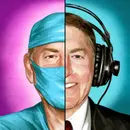


Dr. Lawrence Bass started the podcast in 2020 when teaching residents, lecturing at meetings, and even office visits had all stopped. This podcast let him keep teaching plastic surgery, with facts in place of hype.
Our themed series' approach the same topics from different angles. Decades of Face and Lifting Without Cutting came first.
The Beauty Series and the Facelift Series followed, then Aesthetic Titans, Facts and Fallacies, and the Patient Experience Series.
Season 6 completes the Facelift Series and launches a new Rhinoplasty Series.
The past season's favorite got three votes from the team: the Aesthetic Titans episode with the inimitable former Allure plastic surgery editor Joan Kron.
Have a question, a topic request, or a treatment experience to share?
Email podcast@drbass.net or send a DM on Instagram @drbassnyc. You can stay anonymous.
0:01 Welcome to Park Avenue Plastic Surgery Class, the podcast where we explore controversies and breaking issues in plastic surgery. I'm your co-host, Summer Hardy, a medical student in New York City. I'm excited to be here with Dr. Lawrence Bass, Park Avenue plastic surgeon, educator and technology innovator. The title of today's episode is our fifth birthday. The Park Avenue Plastic Surgery class turns five years old. I wasn't part of the podcast team then. Can you help me look back at the podcast, Dr. Bass, its origins and intent? Sure. The podcast started really during the pandemic. I mean, this was a time when normal activities were curtailed, going to the hospital and teaching the residents, going to medical meetings and lecturing, even a period where we were closed where we didn't have patients coming into the office during the pandemic.
0:52 And so we started recording a podcast and that was an opportunity to talk about plastic surgery, teach about plastic surgery from a remote location, even though things were a little bit shut down. And this was being done from the point of view of someone practicing cutting edge plastic surgery in the venue of Park Avenue, one of the premier locations worldwide, both in terms of volume, quality and advancement for plastic surgery. The scope is aesthetic plastic surgery by and large.
1:33 We sometimes deviate from that a little bit, but we're mostly focused on aesthetic plastic surgery. And the intent was really to give listeners a realist view, let them learn about some of the technical details, how and why different procedures address different aesthetic features, how they work, but also to talk about how to think about consuming beauty care, how to make decision making and consumption in logical practical ways and get people back to some of that common sense decision making that the internet and social media tend to very much muddle.
2:22 We do a little bit of news reporting and technical interpretation of medical information so that it's understandable for the lay people. And the podcast started with Doreen Wu as my co-host. She was a really phenomenal partner for the podcast. We recorded three seasons together and for the past two seasons that's matched by my equally talented current co-host. Thank you, Dr. Bass. So based on this information, who should listen? As I said, this is primarily focused on lay people who are having or considering having plastic surgery.
3:04 It's also for those just interested in this fascinating and fast moving field. Of course, I think it's fascinating because I've dedicated my life and career to it, but lots of other folks do also. And if you share that view, this is a fun podcast to listen to. I think there's some young people in medicine who are interested in plastic surgery or are currently training in plastic surgery who listen to the podcast, and I think that's probably a good thing. They can gain useful perspective and some expert commentary. And we have all manner of really interesting and really accomplished experts join us as guests on the podcast.
3:49 And all the other team members in aesthetic medicine and plastic surgery also could benefit from listening. And I think a number of them actually are among our listeners, not just lay people who like to hear about plastic surgery. That makes sense. And what will they get out of the podcast? Well, the goal again is to give a dose of reality, not hype. So we want to be authoritative and factual, teach an approach to thinking about beauty care and plastic surgery and aesthetic medicine. And I think if you want hype, if you want fantasy, if you're not serious about beauty, this is not the podcast for you.
4:37 But if you want to get down to brass tacks, and I'm a New Yorker, medicine is really a very bottom line thing. And so it's about realistically understanding where you can realistically get. The fantasy is nice in advance, but then it's very disappointing after the fact. So we're trying to create awareness of the realities of what plastic surgery can and cannot do. In some ways, plastic surgery has kind of been the victim of its own success. It's become so popular, it's become so commonplace, it's become so advanced. People think it can do just about anything and it can do a lot of great things.
5:18 It's a wonderful field and it has advanced tremendously over the 30 plus years that I've been a practicing plastic surgeon, but there are limitations to it and it's useful to understand where those limits are and what pathways you should be traveling down rather than be hazy about all of those things. Right. Got it. So what has the podcast covered? A lot of ground over the last half decade. Some discussions of all the major aesthetic surgical procedures, good coverage of non-surgical aesthetics, both injectables like Botox medicines, what we call neuromodulators and fillers as well as energy-based devices.
6:07 We've also had a fair amount of discussion of skin products, regenerative therapies, and the biology behind them. And we've had some great experts on those subjects who are delivering data, not hype. That makes sense. But what is unique to the podcast and how you approach these very general plastic surgery topics? So it's not promotional, it's informational. When you look at most things in websites and on social media, not everything, but most things are really promoting the presenter. They're really advertising essentially.
6:48 And I've really tried to avoid promoting myself or my capabilities. I'm trying to teach you. It's the Park Avenue plastic surgery class. I'm trying to teach you what I know about plastic surgery so you can understand it, not as well as somebody who's been doing it for 30 years, but well enough that you can make good decision making and you can feel confident and comfortable with that decision making. It's approachable. We're really trying to break things down into understandable terms and not have a technical treatise because it is targeted for lay people to be able to understand, but not just me telling you what you should think, trying to help you understand how these things work and understand at least the basics of the science behind these things.
7:46 And we've had a bunch of series to analyze topics from all different points of view. So we've come at a lot of the same topics more than once, but from very different angles and different series. And hopefully between all those different approaches, you come to a really good understanding of those topics. That's right. The series have been a fascinating and unique part of the Park Avenue plastic surgery class. What series have we done? We started our first series right at the end of the second season with the Decades of Face series, and that extended through most of the third season.
8:30 For each decade between your 20s and 80s, I discussed the principal treatments and procedures to maintain and restore facial appearance. I highly recommend the particular episode that relates to your current decade or age and the one following it so that you have orientation about what's important at that age for most people. As a reminder, you can look back and stream any past episode in the five years of podcast episodes. Next after that Decades of Face series came the Lifting Without Cutting series.
9:13 This was an examination of the leading technologies for treating skin laxity without surgical techniques like a facelift or neck lift. And this series ran in season three. What series came next, Dr. Bass? Now we're in season four where several series started along with individual episodes on timely topics, new guests and some returning guests. There was another big event. You joined, Summer, as the new co-host on the Park Avenue Plastic Surgery Class podcast in season four. Right. Okay. So I should remember some of these.
9:55 The beauty series and the facelift series both started in season four. That's right, Summer. The beauty series continued into season five and the facelift series spanned all of season five and will run into half of season six. We also initiated the She and New series in season five, the Titans series about legendary leaders in surgery and aesthetics, the Facts and Fallacies series to review common misconceptions, including those showing up on the internet and in trending news stories. And we just released the first episode of the Patient Experience Series where patients share what it was like to go through a particular procedure.
10:44 What series should we expect in season six? The Facelift Series will continue to its conclusion. The Titans, Facts and Fallacies and Patient Experience series will continue. And are there any new series? A rhinoplasty series will start in season six to explore this very complex arena of aesthetic plastic surgery. I'm looking forward to that. And we also like to mention our favorite episodes. I've really enjoyed the Aesthetic Titan series, especially the episode with Joan Kron. I think it's been great meeting and hearing about all these individuals who have made such a big impact on plastic surgery. What about you, Dr. Bass?
11:27 Customization, not commoditization was my favorite conceptual episode in this past season. I also really enjoyed the chance to have a freewheeling conversation about beauty, plastic surgery and the aesthetics industry with Joan Kron, the former plastic surgery editor at Allure Magazine. And after doing that interview with her, I realized that my career in plastic surgery and her career as a plastic surgery editor started at right about the same time. And so we sort of lived through a number of decades of plastic surgery that we've shared between the two of us, and it was really fun to talk that back and forth with her.
12:13 And what else can we say about the podcast at this five-year juncture? The majority of the podcasts that are started are abandoned within their first year, either due to the time and difficulty of producing the podcast or monetizing it or creator burnout. And internet research suggests any podcast that celebrates a five-year anniversary sits in the top 1%. So I feel we can be proud that we've persevered. I'm doing it because I'm having fun and I think that's why you're doing it, Summer. So we love doing the podcast, but I think we can also feel proud that we've persevered this long.
12:57 Only 8% of podcasts survive long enough to publish 20 episodes, and according to Podmatch, only 5.83% reach a hundred episodes, a landmark which we passed last year at the end of season four. As I said, for us, the podcast is a labor of love. We're having a lot of fun bringing you content about the fascinating field of plastic surgery. All of us who participate in producing the podcast hope you are enjoying the episodes and learning useful information. Remember, we're not offering specific medical advice, only general information.
13:38 Consult with your personal plastic surgeon to make any final decisions about your own medical care. Finally, I'd like to thank the team of people who are part of everyone working on the Park Avenue Plastic Surgery Class Podcast. Doreen, my original co-host, Nate Greenberg from HG Media who produces and edits the podcast, and to Ken Greenberg who runs HG Media and who suggested podcasting to me back in 2021, the podcast wouldn't exist without them and their excellent work. And I asked everybody who I'm going to thank to share a favorite episode.
14:20 Nate's favorite episode gives you a peek at season six. It's the Batman and Bond episode, which will air right after the new year in 2027. Eva Sheie at Axis Marketing helps with post-production content. Her favorite episode is also the Titans episode talking with Joan Kron. And so between me, Summer and Eva, that's three votes for that episode. So I guess that was a good one for sure. Adam Haroon at BrandingMD helped with creative content in the first season and coordinated the podcast episode that we all love so well.
15:03 His favorite was the Telltales in Plastic Surgery episode, and he pointed out to me that the power of one, having a provider who manages everything to keep a coordinated look really goes along with that idea of how to avoid telltales in plastic surgery. And most of all, I'd like to thank my current co-host, Summer, who's always a pleasure to work with, continues to toil side by side with me to produce new and interesting content for these podcasts. Her continued curiosity and enthusiasm and steadiness are a tremendous asset to the podcast. So thank you, Summer.
15:45 It's very much appreciated. Thank you, Dr. Bass. I really enjoyed learning so much about plastic surgery and the aesthetic side of it, especially as I'm going through medical school and learning a lot more about medicine. I can kind of piece together your expertise and knowledge while also still being somewhat of a lay person. Now for my final question, what else would you like to see for the podcast? Well, I think in closing, I'd like to ask the listeners to get more involved. If you're listening, you have questions, you have a topic you'd like to hear about, or you have an experience you'd like to share with us, a plastic surgery or aesthetic treatment experience, good or bad, you could share that with us by email, by DMing us, or we could even have you on the podcast to talk about an experience.
16:36 That could be anonymous or you could say who you are, but you certainly can ask a question to us by email or DM anonymously and we can address that in an upcoming podcast episode. So I'd like to see the listeners get their questions answered, make sure we're getting information that they want to hear about on the podcast episodes. Thank you, Dr. Bass. I'm looking forward to season six and continuing to explore plastic surgery on the podcast. Thank you for listening to the Park Avenue Plastic Surgery Class Podcast. Follow us on Apple Podcasts, write a review and share the show with your friends.
17:18 Be sure to join us next time to avoid missing all the great content that is coming your way. If you want to contact us with comments or questions, we'd love to hear from you. Send us an email at podcast@drbass.net or DM us on Instagram @drbassnyc.